

What Happens After Football Academy Trials?
The trial is over, and now comes the part many families find hardest: working out what happens next. What does "we'd like to see them again" actually mean? And what should you do if the answer is no?
Outcomes vary between clubs and age groups, and a single trial is one step in a young player's journey, not a verdict on their future. This guide explains the possible outcomes after a football academy trial, what each one means, how to ask for and use feedback, what to check before accepting an offer, and how to keep moving forward if your child isn't selected this time.

How Long Before You Hear Back?
There is no standard waiting time. Ask the trial contact who will send the result, by which channel and approximately when. If that date passes, check your inbox and spam folder, then send one short, polite status request with your child’s name, age group and trial date. If no date was given, allow the organiser a reasonable chance to finish its assessment before following up.
A useful follow-up can be as simple as: “Thank you for the trial on [date]. Could you tell us when a decision for the [age group] is expected? Please let us know if you need anything further from us.”
The Possible Outcomes After an Academy Trial
A club may offer a place, invite another assessment, recommend another setting, ask to stay in contact, put a player on a waitlist, or decide not to select them. The labels and process vary, so ask what the message means in practice.
| Outcome | What it means | Your next step |
| Offer of a place | The provider wants to take a formal step; the terms depend on the programme | Request written terms and confirm the registration process |
| Invited back or extended assessment | The club wants to see more before deciding | Confirm dates, duration and your contact |
| Recommended to another programme | A separate setting has been suggested | Check operator, fees, fixtures and reassessment |
| “Keep in touch” | Future contact is possible but not assured | Agree a contact point and carry on playing |
| Waitlisted or decision pending | No final offer has been made | Ask when it will be resolved and keep options open |
| Not selected this time | No place from this assessment | Ask once for feedback and plan the next step |
An offer of a place
An offer means the club wants to take the next formal step. Ask for the terms and registration process in writing, and confirm whether it is a professional club academy registration or a place in a separate paid programme. An offer itself is not a completed registration.
An invitation back or an extended assessment
Your child may be invited to another trial or to train with an age group while the club assesses them further. This is encouraging but does not guarantee selection. Confirm the dates, the length of the assessment, any permission needed from the current club, and who will communicate the decision.
A recommendation to a development centre or another programme
A club may suggest a development centre, pre-academy group or another programme. That is a separate opportunity, not an academy registration or a promise of later selection. Ask who runs it, whether it is selected or open enrolment, what it costs, whether matches are included, and how players are reassessed.
"Keep in touch" or a return in the future
“Keep in touch” can mean several things and may not come with a commitment to watch the player again. Ask who will make contact and when, whether the club wants match updates, and whether another trial is possible. Keep playing elsewhere while you wait.
Waitlisted or decision pending
A waitlist is neither a confirmed place nor a rejection. The club may still be settling squad numbers or waiting for another decision. Ask when it expects to resolve the list, whether your child should attend another session, and who will update you. You can consider other suitable options in the meantime; if another offer has a deadline, tell the club factually.
Not selected this time
A decision not to offer a place applies to this trial and squad. Ask whether brief feedback is available, then focus on the next suitable playing environment. A rejection does not settle a young player’s long-term potential.
Verbal Interest vs a Written Offer
It is easy to read too much into positive comments. A coach saying "they did really well" at the end of a session, an acknowledgement email, or a message saying the club would "like to see more" are encouraging, but none of them is an offer.
If a club says it wants to proceed, ask it to set out the offer and next steps in writing. For a professional club academy, registration involves its own paperwork and approval. A private provider may instead offer a paid programme place with different terms. Do not leave a current team or decline another opportunity based only on a conversation at the pitch.

How to Ask for and Use Trial Feedback
A polite request for feedback is reasonable after either outcome. Write to the named trial contact once, thank them for the opportunity, and ask for one or two useful development points if available. Large trials may not provide individual feedback, and silence does not by itself mean a place has been offered or refused.
When you do receive feedback, look for specific development points rather than general praise or criticism. "Needs to scan more before receiving the ball" is far more useful than "good effort". If something isn't clear, it's fine to ask a follow-up question once.
If feedback arrives, share one or two clear points with your child’s current coach and agree how to practise them in regular training and matches. Do not treat a single trial note as a complete assessment. For more on age-specific observation, see What Do Scouts Look For in U17 Players.

If Your Child Is Offered a Place
What happens next
For a Premier League club academy registration, the Parent Hub describes a form, photograph, proof of address and date of birth, followed by an induction about coaching, games, education and support. Ask the club when the registration is actually approved and who your contacts are. Private academies, school programmes and camps have different admissions and fee terms; request their specific documents before accepting.
What to check before you agree
Before accepting, check the training and match timetable, travel, school arrangements, likely playing opportunities, welfare and safeguarding contacts, how progress is reviewed, the registration period and what happens when it ends. If another club is involved, ask the new club and an independent adviser about the applicable registration rules. For any paid programme, request the full fee schedule, inclusions, refund terms and whether fixtures are actually provided.

Your rights and independent advice
The Premier League Parent Hub says that, after a child signs a Premier League club academy registration form, a family choosing to cancel must contact the Premier League within seven days. This rule is specific to that registration process; private programmes and trial bookings have their own terms. The Parent Hub also explains its rules on inducements; ask the League before accepting an unusual payment or benefit. See the Premier League Parent Hub.
If you want an independent view before committing, the PFA's Youth Advisory service offers free, confidential advice about trialling, registration and academy processes. It is a useful sounding board if anything about an offer feels unclear.
Talking it through with your child
Ask your child how they feel about joining and discuss the extra training, travel, friendships and school commitments together. An offer is valuable only if the environment and daily routine work for the player and family.
If there is more than one offer
Occasionally a player receives interest from more than one club. Compare the fit rather than the badge: where your child is likely to get the most playing time, the best coaching and the right balance with school.
If Your Child Isn't Selected
Handling the disappointment
Being told "not this time" is hard, especially for a young player who has worked towards a trial for months. Your reaction matters more than you might think. On the drive home, and in the days after, focus on what your child did well and how they handled the day, rather than the result. Let them be disappointed, listen, and avoid blaming the coaches, the other players or your child. Separating effort from outcome helps young players learn that a setback isn't a judgement on who they are.
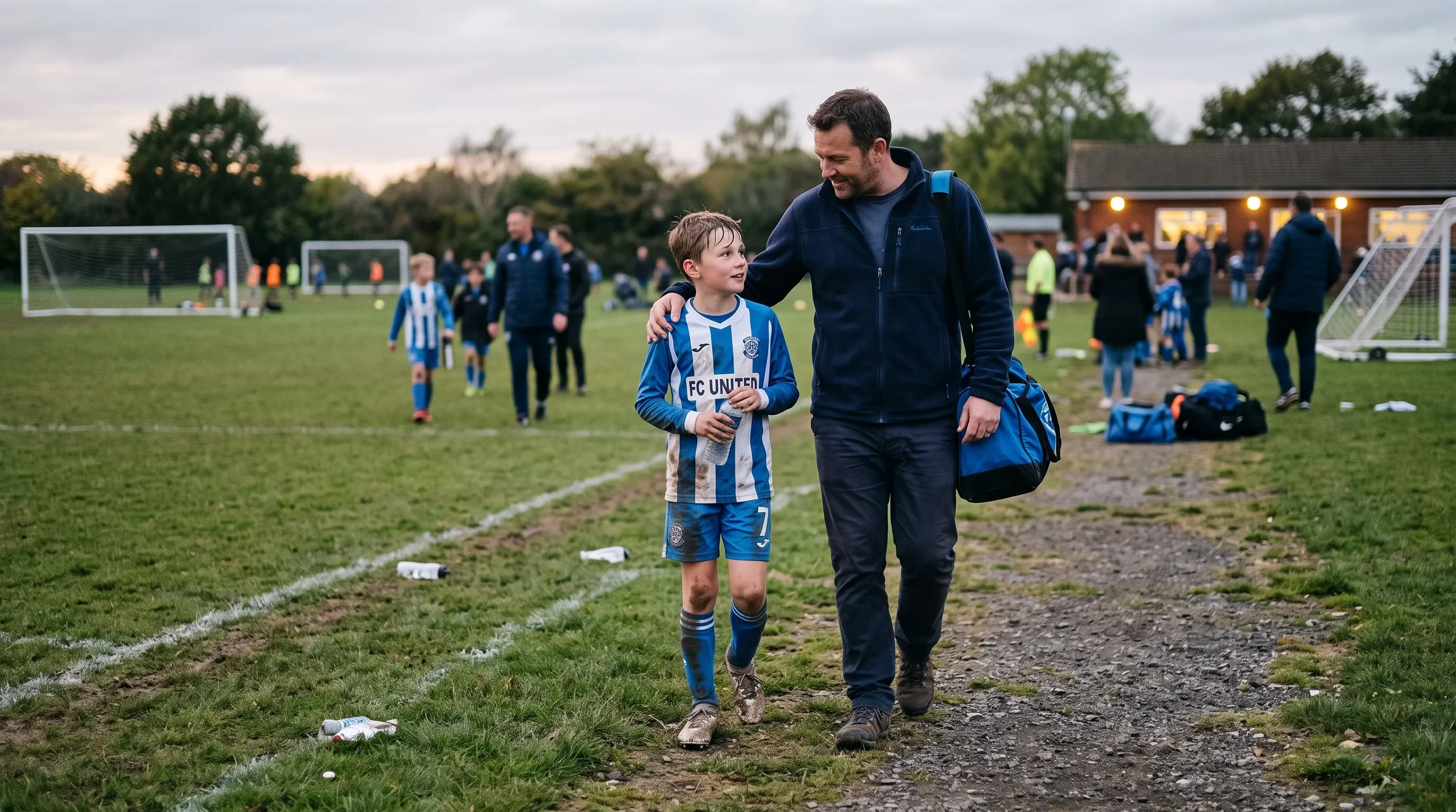
Why "not this time" rarely means "never"
Selection depends on the squad’s needs and the information coaches have at that point. Growth, position, available places and fit may all influence a decision. The useful conclusion is narrower than “never”: this particular club has not offered a place through this particular assessment. Give the player room to recover, then decide what they want to do next.
Keeping development moving
Keep playing regular matches at a suitable level, and work on any specific feedback with a trusted coach. Consider another assessment or a development programme only when it suits the player’s goals and schedule. If fitness was a clear development point, our guide to Football Fitness Training for Young Players Preparing for Academy Trials covers age-appropriate preparation. A future trial may be possible, but it is not automatic.
Other Routes Forward
Grassroots and school football can provide regular matches and development. A private academy or development centre may add coaching, but its fees, selection process, fixtures and relationship with professional clubs vary; check the actual offer before enrolling. See Pro Football Academy vs Local Football Academy for that comparison. Older players may also explore education-linked, residential or university routes where appropriate; Residential Football Academies in England explains the residential option.
What Parents Can Do After Any Trial
Keep a simple record of the trial date, named contact, decision and any feedback. Use a football CV only for relevant, verifiable experience when an application asks for it; attendance at one trial is not an academy signing. How to Write a Football CV for Academy Applications covers what to include. Above all, protect the child’s routine and enjoyment of the game.
How AF Global Can Help
AF Global can help families compare suitable next steps based on the player’s football, education and goals. Its Scholarship Trial Days page currently describes events for local or regional boys aged 7–11; check current dates and eligibility before applying. Players aged 14 and over can explore Elite Player Mentoring for a structured development plan after feedback. Ask for the current entry criteria, schedule and costs before choosing a route.
If you'd like to talk about your child's next step, register your interest and our team will be in touch.
Final Thoughts
After a football academy trial, establish the actual decision and what it requires you to do. Get formal terms in writing, ask for useful feedback where available, and let the player continue in an environment that supports regular football and school. One outcome is information for the next decision, not a final judgement on a child’s future. If you would like to explore AF Global options, register your interest.
Frequently Asked Questions
-
A place, another assessment, another programme, a request to stay in touch, a waitlist or non-selection may follow. Confirm whether any of these is a formal offer and who will update you next.
-
No. Training again means the club wants more information. Ask what stage of assessment your child is at; a club academy place requires a separate formal offer and registration process.
-
It means the academy wants to see more before deciding, often over several sessions or weeks. It's a positive sign, but not a guarantee. Confirm the dates, how long the assessment will last and who your contact is.
-
Ask the club what the waitlist means, when it expects to decide, and whether another session is required. A waitlist is not a place, so keep other suitable opportunities open.