

Football Fitness Training for Young Players Preparing for Academy Trials
An academy trial may include football drills, small-sided games and match play. Players need enough energy to keep moving, using the ball well and making decisions throughout the session. The format and physical demands vary by age and provider, and many trials do not include a separate fitness test.
Fitness alone will not earn your child a place. The useful goal is to arrive healthy, rested and able to show their usual football ability. Preparation should build gradually around the football they already play, with attention to strength, movement, recovery and enjoyment. This guide explains age-appropriate drills, an example week and what to change as a trial approaches. For the invitation, assessment and trial-day process, see Football Trials in England.
Why Fitness Matters at an Academy Trial
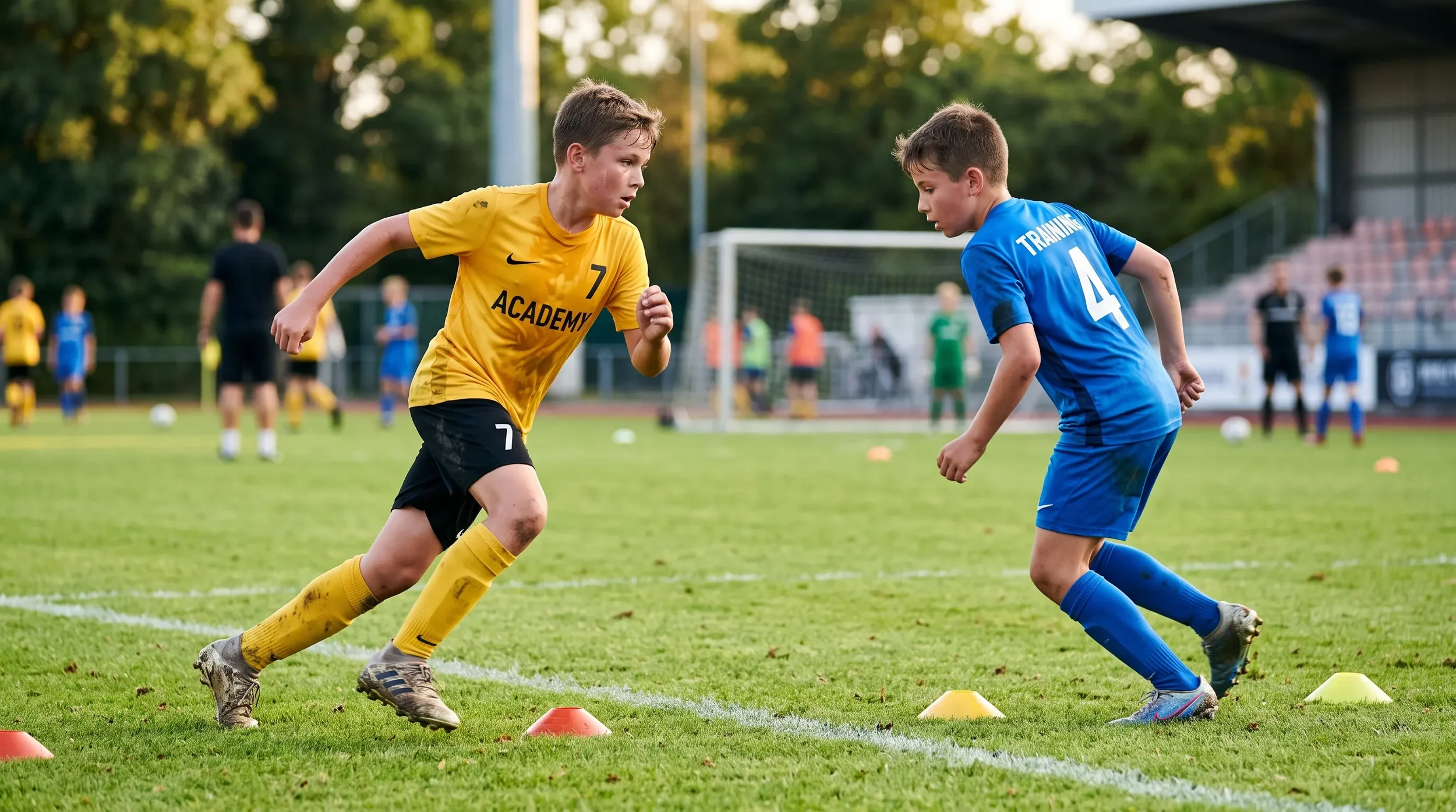
Small-sided games and match situations can demand repeated accelerations, braking, turning and recovery between efforts. Being prepared helps a player keep offering for the ball and applying their skills as the session goes on. A trial might be one session or several, so ask the organiser what the schedule involves.
That said, coaches look at far more than fitness. They are assessing technique, decision-making, attitude and potential, and they take age and physical development into account.
What "Football Fitness" Means for Young Players
Football fitness is more than a distance run or a single score. It includes the physical qualities that help a player repeat football actions with control.
Stamina helps a player sustain activity and recover between harder efforts. Speed and acceleration support short runs into space; changing direction requires control when stopping, turning and reacting. Strength, balance and coordination support movement and contact. Mobility helps a player move comfortably through the actions the game demands.
For young players, the key point is that most of these qualities develop best with the ball, through football itself. Extra fitness work should support their football, not replace it.

Start With an Honest Check
Do not start with a maximum-effort test. First ask how your child feels late in matches, whether they recover between sessions, and what club training, matches, PE and other sports already fill the week. A player returning from illness or injury needs a different plan from one playing regularly; seek appropriate medical or physiotherapy advice before increasing work after an injury.
Fitness tests you might see at a trial
Some providers may include a shuttle run, such as a bleep or Yo-Yo test, or a short sprint or change-of-direction task. Others assess movement during football drills and games without a formal test. There is no universal trial test, distance or pass score: ask the organiser what will happen, and do not train repeatedly to an assumed benchmark.
Any result is only one part of an assessment. Coaches may consider age, growth and what a player does with and without the ball. Build useful fitness through normal training and well-planned additional work, rather than chasing a single number.
Principles of Safe, Age-Appropriate Fitness Training
The most important principle is football first. For young players, small-sided games and ball work develop endurance, speed and agility at the same time as technique and decision-making. That is why they should form the core of any preparation.
Quality and recovery matter. Brief accelerations and controlled changes of direction are useful, but easy aerobic activity also has a place in a balanced week. Add new work gradually, and keep enough time between demanding sessions for the child to recover. A final-week sprint programme cannot replace months of regular play.
Teach good movement before increasing resistance: an age-appropriate squat, lunge, landing or change of direction should be controlled. Suitable, supervised strength work can include bodyweight movements and, when appropriate, external resistance. Variety and other sports can help children develop coordination and movement skills.
Children of the same age can mature at different rates. During a growth spurt, a player may temporarily feel less coordinated or develop knee or heel pain. Tell the coach, adjust the workload and seek a clinician's advice for persistent or worsening pain.
Football Fitness Drills for Trial Preparation
These are examples to adapt with your child's coach, not a prescription or an extra session to add on top of every club week. Stop a drill if technique deteriorates or pain appears.
Endurance and repeated sprints
Small-sided games and possession games let players practise repeated efforts while reading play and using the ball. A coach can also use a short dribble or chase, followed by enough recovery to repeat the movement with control. Vary the challenge rather than automatically reducing rest each week.
Speed and acceleration
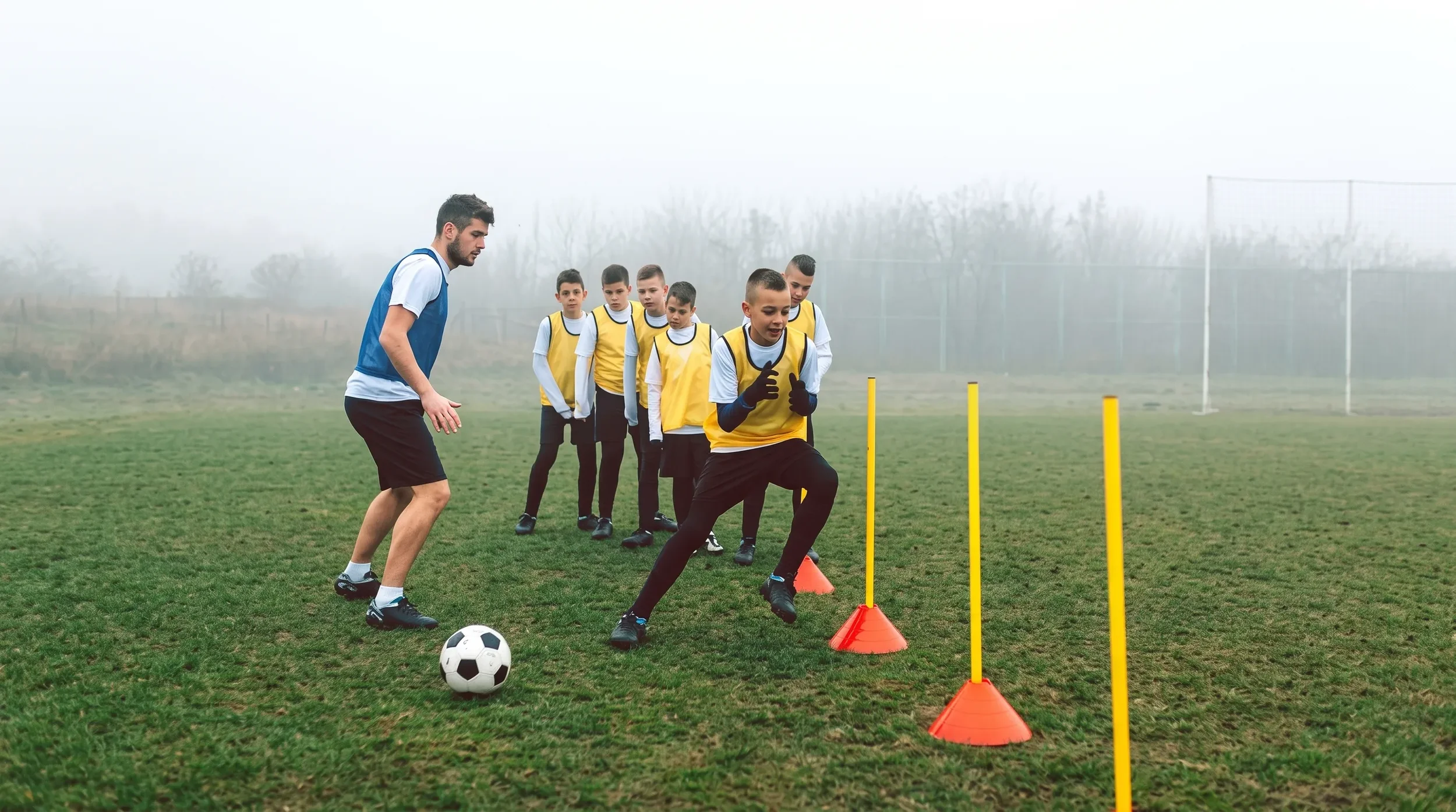
Practice short accelerations when the player is fresh, after a progressive warm-up. For example, a coach may call a direction or show a pass for the player to react to, sprint a short distance and then recover before another repetition. Stop when speed or movement quality drops; a tired sprint becomes a different exercise.
Agility and change of direction
Cones can teach stopping and turning, but a football-based reaction is more realistic. Try a mirror game in pairs or a one-on-one possession game: the player responds to a teammate or opponent rather than running a memorized route. Keep space, footwear and surface suitable for the age group.
Strength and stability
Squats, lunges, bridges, planks and single-leg balance work can help players learn control. A coach can also teach safe landing and braking after a short run or jump. Select exercises that the player can perform comfortably with good technique; pain is a reason to stop and reassess.
Supervised strength training is not restricted to bodyweight or to older teenagers. Appropriate resistance can be useful for young players when a qualified adult teaches technique and adjusts the exercise to their experience. A trial is not a reason to start heavy or unfamiliar lifting; more advanced jumps or loads need careful progression.
Warm-up and mobility
Begin with a progressive, age-appropriate warm-up: easy movement, dynamic actions, balance and football-specific accelerations. FIFA 11+ Kids and the 11+ provide examples for coaches to adapt to the group. Avoid treating a few static stretches as a substitute for warming up. A gentle cool-down can help the player return to a comfortable level of activity.
Building a Pre-Trial Fitness Plan
If there are several weeks before a trial, use them to make small adjustments to an existing routine, not to start from zero. Six to eight weeks is an illustrative planning window, not a guaranteed time to become match fit. Early on, prioritise regular football and sound movement; later, add a little focused acceleration or strength work only if the week has room. Reduce any unnecessary hard work close to the trial so the player arrives fresh. If the invitation comes at short notice, keep normal training and recovery rather than cramming.
The example below is for a healthy 13- to 15-year-old already training twice a week and playing a Saturday match. It is not a target number of sessions:
| Day | Focus |
| Monday | Rest or light activity |
| Tuesday | Club training |
| Wednesday | Optional short coached acceleration and movement session, if recovered; otherwise rest |
| Thursday | Club training |
| Friday | Rest |
| Saturday | Match |
| Sunday | Optional easy ball play with friends or rest, depending on Saturday and the coming week |
Illustrative only. The Wednesday and Sunday activities are optional; if school, club sessions or the match already make the week demanding, choose recovery instead. Adapt with the child's coach.
Age and development matter more than a rigid age cut-off. For younger children, keep movement playful and football-led; basic coached strength and balance work can still be appropriate. Adolescents can learn more structured speed and resistance exercises as technique, maturity and supervision allow. Growth spurts, previous injury and the current weekly load should guide the choice for every age.

Your future
starts
here
REGISTER
Balancing Extra Training With Club Football and School
Count the full week before adding a session: club football, matches, PE, school sport, other activities and travel all affect fatigue. The NHS's general activity guidance for ages 5 to 18 is an average of at least 60 minutes of moderate or vigorous movement per day across the week; it is a health guideline, not a target for extra trial training. A child who already plays often may benefit more from sleep and recovery than another workout.
Watch for fatigue that persists, declining enthusiasm, disrupted sleep, recurring knee or heel pain, or a change in movement. Cut back on extra work and tell the coach. Stop activity that worsens pain and seek advice from a physiotherapist or doctor if symptoms persist, the child limps, or they are returning from injury; do not push through pain to attend a trial.
Rest days aren't a sign of weakness. They are when the body adapts to training, and they are part of any good plan.

Recovery, Sleep and Fueling
Sleep supports recovery and learning. Guidance used by NHS children's services suggests 9 to 12 hours in 24 hours for ages 6 to 12, and 8 to 10 hours for ages 13 to 18. Keep a regular sleep routine, especially before the trial, without turning a single night into another source of pressure.
Regular meals and enough food matter for an active, growing child. Include carbohydrate-rich foods for energy, protein-containing foods, fruit and vegetables, and water throughout the day. On trial day, choose familiar food and make time to drink; avoid testing a new supplement or pre-workout product. If eating, growth or a medical condition is a concern, ask a registered dietitian or GP for individual advice.
The Final Week Before a Trial
The last week is for maintaining familiar football activity and arriving rested. Avoid adding hard or unfamiliar conditioning. In the final day or two, follow the coach's plan and keep work light enough that the player is recovered for the trial; a blanket 48-hour ban on all hard activity does not suit every schedule. Priorities sleep, meals and the player's normal routine.
For everything else about the day itself, from what to bring to how the session runs, see our guide to Football Trials in England.

When to Get Expert Help
A coach who knows the player can help fit physical preparation around their football schedule. For more structured strength or speed work, seek a suitably qualified strength and conditioning professional who works with young people. If there is pain, illness or a recent injury, consult an appropriate clinician before increasing training.
When you speak to a coach, ask: what is appropriate for my child's age and stage of growth? How should extra sessions fit around their club football? How will we know if the training is working? And what should we stop straight away if something hurts? A good coach will welcome these questions.
How AF Global Approaches Physical Development
At AF Global, football and physical development form part of the wider academy programme. The current published programme describes four to six training sessions a week and UEFA-licensed coaching, while its Intensive Training Camps list strength and conditioning plus recovery and performance workshops. AF Global also describes a partnership with Playermaker for player performance data. The exact timetable, assessment tools and recovery support depend on the location, age group and programme; families should check the current details when enquiring.
AF Global's Intensive Training Camps offer week-long residential football training for players aged 12 to 18 who already train and play regularly. Sessions may include technical and tactical work, strength and conditioning, recovery workshops and match play. Ask for the specific week's schedule and discuss suitability if your child is coming back from injury. To explore a programme, register your interest.
Final Thoughts
The best preparation is regular football, a modest amount of well-coached physical work where needed, and enough recovery to arrive healthy. Keep the focus on how the child moves and plays, rather than a test score or a last-minute fitness boost. A coach can help adjust the example week to your child's current load. For AF Global's current academy and camp options, register your interest.
Frequently Asked Questions
-
Start with your existing football week. Over several weeks, use small-sided games, controlled accelerations and age-appropriate strength or balance work if there is room to add them. A coach can adjust the amount to your starting fitness and match schedule. Ease off unnecessary hard work close to the trial.
-
There is no fixed time. A player who already trains and plays regularly may simply need to maintain fitness and arrive rested; after a break, illness or injury, rebuilding can take longer. Increase activity gradually and seek professional advice for a return from injury rather than working to a deadline.
-
Do not try to build fitness in a few days. Keep familiar training, avoid extra hard or unfamiliar sessions, and arrive rested, fed and hydrated. If you are ill or injured, tell the organiser and seek appropriate advice rather than training through symptoms.
-
There is no standard battery across all academy trials. Some use shuttle runs or short sprints; many assess players in football activities without formal testing. Ask the organiser, and remember that a test result is only one part of the picture.