

Residential Football Academies in England Explained
For many families, especially those living overseas, choosing a football academy in England raises a bigger question than which coach or which fixtures. It's whether their child should live there.
A residential football academy can combine regular football training, full-time education and boarding in one coordinated programme. It can suit a motivated young player whose family is comfortable with boarding. For others, training while living at home may be a better fit.
This guide explains how residential football academies in England work, what daily life looks like, how pastoral care and education fit in, what it costs, and how to choose the right one. If you're new to how academies work in general, start with our guide to What Is a Football Academy?.
In short: a full-year residential football programme combines boarding, education and regular training. It is commonly delivered through an independent school, college or university pathway rather than through a professional club academy. Fees, entry ages and accommodation arrangements vary, so parents should examine pastoral care as closely as coaching.
What Is a Residential Football Academy?
A residential football programme allows players to live in school or campus accommodation, study and train within a coordinated timetable. Accommodation and training facilities are not necessarily on the same site. Ask how the school, boarding staff and coaches coordinate the player’s week.
This is different from a Premier League or EFL club academy. Most club academies are non-residential and recruit players who live within travelling distance, so a child trains in the evenings and goes home. For families outside commuting range, and particularly for international players, a residential academy is often the realistic way to combine serious football with a full English education.
Residential academy or holiday football camp?
A residential football camp is a short stay, often during a school holiday. It may include overnight accommodation and coaching but does not automatically include a school place or a year-round football and education pathway. If your child wants to test boarding before committing to a full academic year, ask about a suitable short programme and how its supervision and accommodation work.
The three main models
The most common model is a football programme inside an independent boarding school. Players aged roughly 11 to 18 attend a fee-paying school and follow a dedicated football programme alongside GCSEs, A-Levels or equivalent qualifications.
For older players, residential football and education colleges may offer full-time football alongside a BTEC, A-Levels or another qualification, with accommodation depending on the provider. University performance pathways are for eligible adult students studying for a degree; ask separately about programme fees and the availability and cost of campus accommodation.
Why Families Choose a Residential Academy
Every family’s reasons are different. If classrooms, accommodation and football facilities are on or near one campus, less time may be spent commuting and more can be planned for training, recovery and study. Ask for the real timetable and travel times rather than assuming all residential programmes work in the same way.
Competitive fixtures can help players test themselves against strong opposition. Some programmes arrange games against professional academy sides, but fixtures do not guarantee that scouts will attend or that a player will be offered a trial. Ask for recent fixture examples and evidence of how players have progressed. Boarding can also help young people practise responsibility and self-management when the support suits their age and needs.
For international families there is an extra consideration. FIFA's rules restrict international transfers of players under 18, so moving to England does not automatically mean a player can register with an English club. Full-time education at a school with a strong football programme lets overseas players study and train at a high level in the meantime. We cover the rules in more detail in UK vs Overseas Football Academies.
A Typical Day and Week at a Residential Football Academy
Schedules vary between programmes, but most follow a similar rhythm.
| Time | Activity |
| 7:00am | Wake up and breakfast in the boarding house |
| 8:30am | Morning lessons |
| 10:30am | Football training (technical and tactical session) |
| 12:30pm | Lunch |
| 1:30pm | Afternoon lessons |
| 4:00pm | Strength and conditioning or recovery |
| 5:30pm | Dinner |
| 6:30pm | Supervised prep (homework) |
| 8:30pm | Free time in the boarding house |
| 10:00pm | Lights out (earlier for younger boarders) |
This is an illustrative example, not a fixed timetable. Ask each academy for its own.
A typical week
Across a week, players usually combine four to six football sessions with strength and conditioning, video analysis, recovery work and one or two competitive fixtures. Lessons run as normal alongside this, and evenings include supervised study time.
At AF Global, players train four to six times a week, including strength and conditioning, and boarders train more than day players. Squads play weekly matches and fixtures across the UK and Europe.
Weekends and holidays
Weekends may include fixtures, recovery and boarding-house activities. Schools have different arrangements for exeat weekends, half-terms and holidays: some provide supervised accommodation at certain times and others close their boarding houses. International families should ask for the written calendar, supervision arrangements and a suitable place for the child to stay whenever boarding is unavailable.
Boarding Life, Pastoral Care and Wellbeing
For most parents, this is the most important part of the decision. A player who is homesick, tired or unhappy will not perform, however good the coaching.
Who looks after your child
Boarders live in a boarding house run by house parents: members of staff who live on site and are responsible for day-to-day care. Most schools also have a matron or medical centre, a school nurse and access to counselling support. At a well-run football programme, coaches, house staff and teachers talk to each other regularly about every player, so problems are spotted early.

Safeguarding and inspection
Boarding schools in England must meet the government's National Minimum Standards for Boarding Schools. Independent schools are inspected against them, many by the Independent Schools Inspectorate (ISI). Before choosing an academy, read the school's most recent inspection report. It will tell you more about welfare than any brochure.
Settling in and homesickness
Homesickness is normal, especially in the first term, and it usually eases as players build friendships and routines. Parents can help a great deal. Agreeing a regular time for calls tends to work better than constant contact, and visiting for matches when you can gives your child something to look forward to. If you have worries, share them with house staff early rather than waiting. Above all, stay positive about the experience, even when your child has a difficult week.
Wellbeing and mental performance
Good residential programmes treat wellbeing as part of performance, not an add-on. Look for access to player welfare officers, sports psychology or mental performance coaching, and clear routes for players to raise concerns. AF Global provides safeguarding-trained staff, player welfare officers and sports psychology support.
How Education Works Alongside Training
In a residential academy, education is delivered by the school or college, not squeezed around football. Younger players typically work towards GCSEs between the ages of 14 and 16. From 16, most move on to A-Levels or the International Baccalaureate, while some choose a BTEC sports qualification. A few schools also offer the US High School Diploma, which suits players considering US college football.
Independent schools usually have smaller classes and dedicated academic support, including English as an Additional Language (EAL) for international students. Training is timetabled so it doesn't clash with core lessons, and supervised evening prep keeps homework on track.
At AF Global, staff work on-site within the partner school, so coaches and teachers plan each player's week together.

Your future
starts
here
REGISTER
How Much Does a Residential Football Academy Cost?
Fees vary widely, so ask for a written, tax-inclusive breakdown for the specific programme and year. A school may quote tuition, boarding and football together or separately. Check accommodation, meals, pastoral care, coaching and fixtures, then ask whether kit, tours, laundry, exams and transport are extra. International families may also need to budget for the applicable visa and immigration health surcharge, flights and accommodation during holidays or exeats.

For context, the Independent Schools Council’s 2025 Census reports an average boarding fee of £14,365 per term, around £43,095 across three terms, excluding VAT. This is an average for participating independent schools, not a typical football-academy package price; a separate football programme and other extras may cost more. From January 2025, private-school education and boarding services have generally been subject to 20% VAT. Ask whether a quoted fee includes it.
AF Global’s registration page lists around £30,000 to £50,000+ per academic year for international boarding players, including tuition, accommodation, meals and football. It lists £15,000 to £30,000 for home-based players, excluding accommodation. Families should request a current written quote for their chosen location and confirm what is included, whether VAT is included and which extras apply.
Scholarships and bursaries can reduce costs, and we explain how they work in our UK Boarding Schools: Admissions, Scholarships & Visa Guide. Whatever you're comparing, remember that the cheapest option is rarely the best value. Always ask for a written breakdown of what each fee includes.
What Age Should a Player Start Boarding?
There is no single right age. It depends on the child, the family and the football.
Starting at 11 gives a child plenty of time to settle and build friendships, but it is young to live away from home, and football is still at the foundation stage. Age 13 is the most common boarding entry point and leads naturally into GCSEs, although it comes with a big transition during early adolescence.
Age 16, the start of Sixth Form, is the most popular route for international players. Players are more mature and independent by then, but they have less time to adapt before key exams and important football decisions.
Whatever the age, look for signs that your child is ready. They should manage their daily routines independently and feel confident talking to adults about problems. Most importantly, they should be genuinely motivated to train and truly enthusiastic about boarding, not just going along with their parents' plan.
International Students: Visas and Guardianship
The right visa depends on the student’s nationality, age and place of study. Eligible students aged 4 to 17 studying at a licensed independent school may use the Child Student visa route, which requires a Confirmation of Acceptance for Studies (CAS). Students aged 18 or over normally use a different student visa route. Families must also establish suitable living and care arrangements whenever the student is not boarding. This may involve returning home, staying with an eligible relative or arranging an appropriate nominated guardian, subject to the school’s policies and UK visa rules.
Our UK Boarding Schools: Admissions, Scholarships & Visa Guide explains the school application process in more detail. Before making travel or guardianship plans, check the relevant school’s requirements and current guidance on gov.uk.
Residential Football Academies in England: Your Options
Independent boarding school football programmes suit players aged 11 to 18 who want elite football without compromising their academics. Residential football and education colleges suit older players, from 16 to 19, who are focused on football and prefer a vocational route such as a BTEC. University performance pathways, from 18, suit players who want high-level football alongside a degree.
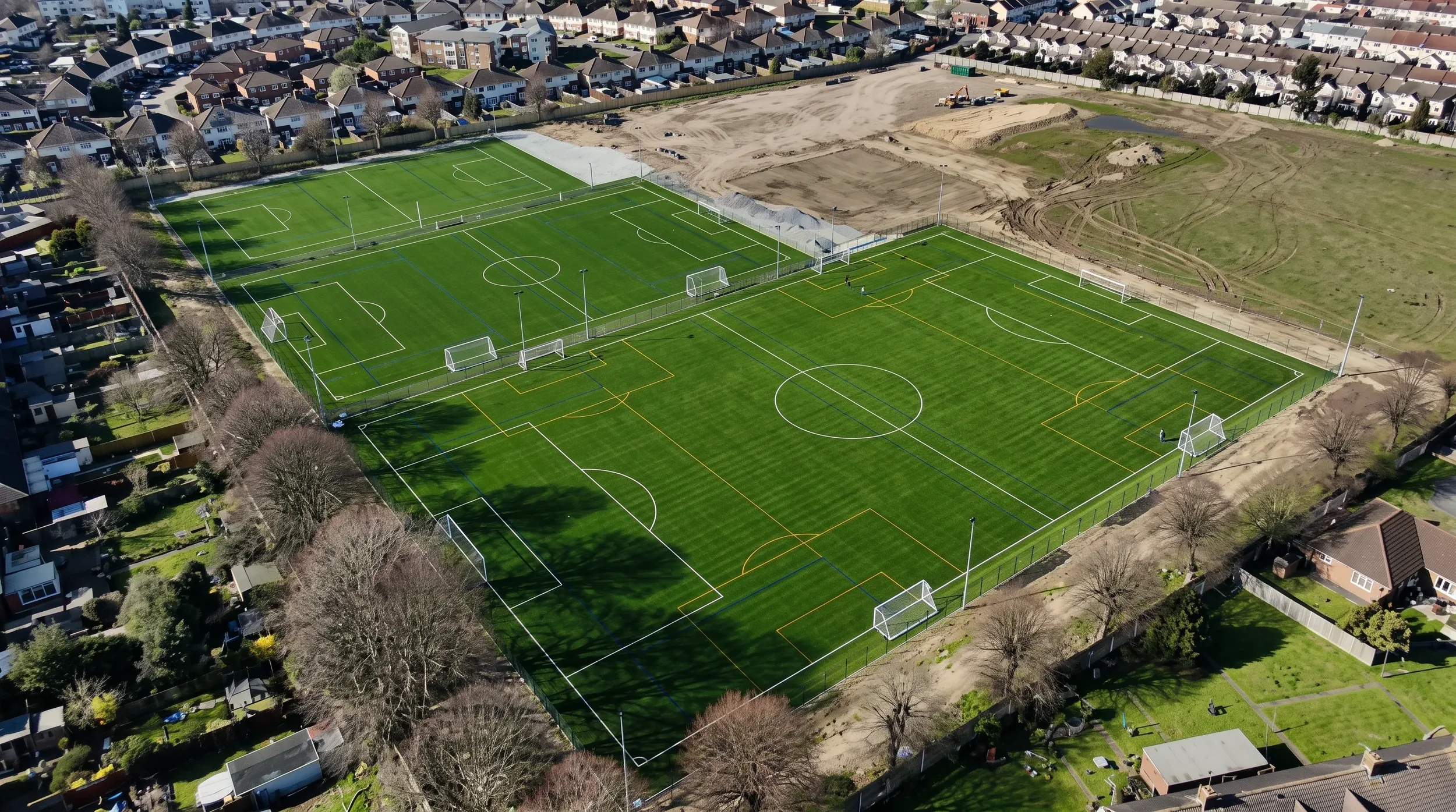
AF Global describes a school-based residential route in England. AF Global London is a full-time football programme within a partner independent boarding school, about 45 minutes from London. The published facilities include floodlit artificial pitches, two grass pitches, a strength and conditioning gym and a refurbished boarding house.
For players aged 18 and over, AF Global has announced an Elite Performance Football Pathway with the University of Hertfordshire, combining football development with degree study. Prospective students should confirm the next intake, what the football and university tuition fees cover, and the terms and cost of any on-campus accommodation before applying.
How to Choose the Right Residential Academy
Visit if you can, and when you do, focus on the things that only matter when your child lives away from home. Ask how many boarding staff look after each house and who is on duty at night and at weekends. Read the school's latest inspection report and look at what it says about boarding and welfare. Find out what happens during exeat weekends and holidays, and who is responsible for your child when the boarding house is closed.
Ask for a written breakdown of exactly what boarding and football fees include, whether VAT is included, and the arrangements for exeats and holidays. Check how the school communicates with parents who live far away and what support is available if a child is homesick or unhappy. If a programme advertises professional academy fixtures or scout exposure, ask for recent examples rather than treating a general claim as a guarantee.
Be cautious if an academy promises guaranteed professional contracts, is reluctant to share a recent inspection report, or gives vague answers about who is responsible for your child outside lessons and training. For questions about coaching quality, fixtures and how to compare programmes, see our guide to Choosing the Right Football Academy in London.

Final Thoughts
A residential football academy in England suits motivated players, and families who want elite football and a strong education in the same place. Done well, it develops better players and more independent, resilient young people.
The right choice comes down to the individual child, the quality of pastoral care, and an honest look at what each programme includes. If you'd like to explore whether a residential place is right for your child, register your interest with AF Global. Our team will talk you through the options.
Frequently Asked Questions
-
Description teYes. Some independent boarding schools, residential football colleges and university pathways accept international students. Admissions, visas and living arrangements depend on the student and provider. Eligible 4–17-year-olds at independent schools may use the Child Student visa route; students aged 18 or over should check the relevant student visa route. Ask where the student can stay when boarding is unavailable.xt goes here
-
Very few. Most Premier League and EFL academies recruit players who live within travelling distance and train in the evenings and at weekends. Some clubs arrange accommodation or host families for older players. Most residential football places in England are offered through independent schools, colleges and universities.
-
Costs vary considerably. AF Global’s registration page lists international boarding places around £30,000 to £50,000+ per academic year,; request a current written quote. The ISC’s 2025 independent-school boarding average is about £43,095 across three terms excluding VAT and does not represent a football programme package. Confirm VAT, football fees, travel, visa and holiday accommodation costs separately.
-
Many boarding schools take pupils from 11. The most common entry points are 13 and 16, and 16 is the most popular for international students joining Sixth Form. University pathways start at 18.