

A football scholarship application needs to show more than talent. Providers may consider playing level, academic progress, attitude and how well a player fits their programme. Clear evidence and thoughtful preparation help your child present those qualities, although the criteria differ between schools, clubs and universities.
Whether your child is seeking a school award or a football academy scholarship, this guide explains how to prepare an application, approach an assessment day and answer interview questions. If you are still choosing a route, start with Football Scholarships in the UK for the types of award, eligibility and funding. No application or assessment can guarantee a place.

Is Your Child Ready to Apply?
Before investing time in applications, take an honest look at where your child is now. Are they playing regularly at a good standard, and performing consistently rather than in the occasional standout game? Are they on track academically, given that most scholarships come with education? And, most importantly, is this something they want for themselves?
Your child's current coach is often the best person to ask. A frank conversation about their level, strengths and areas to work on will help you target the right programmes and avoid applying for places that aren't yet a realistic fit. A player who isn't ready this year may be a strong candidate in twelve months.
When to Start: A Scholarship Preparation Timeline
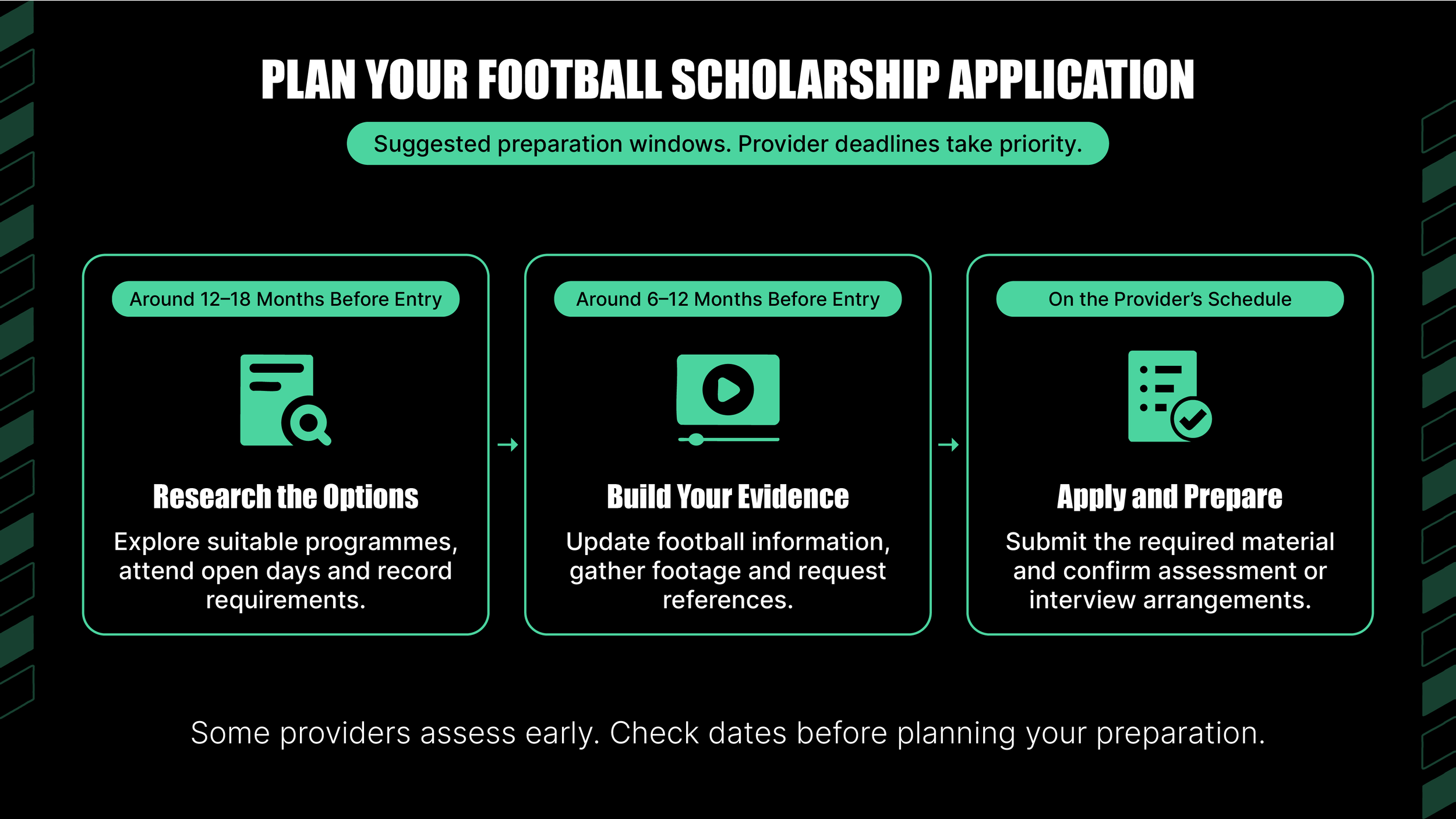
Start researching early enough to meet each provider’s deadlines. As an illustrative planning window, families might explore programmes and open days 12 to 18 months before entry, but some routes require a different timetable. Record the actual dates for your shortlist before deciding when to prepare each part of the application.
In the months before applying, update the football CV, gather match footage and approach referees. Keep school reports and predicted grades ready, and work with the current coach on any development priorities. The provider’s deadline should guide the schedule, rather than a fixed countdown.
The application and assessment stages then follow each provider's own timetable. Many independent schools assess candidates well before the year of entry, while university sports scholarships usually follow the main admissions cycle. Always check dates directly with each provider rather than relying on general timelines, because they vary widely and change from year to year.
Choosing Where to Apply
The strongest applications go to programmes that genuinely fit. Think about the level of football your child will play, the academic standard and subjects on offer, the location, and whether day or boarding suits your family. A programme where your child will play regularly and be challenged is usually a better choice than a more famous name where they would struggle to get game time.
Build a manageable shortlist that includes programmes suited to your child’s current level and education goals. Tailor each application to the provider’s requirements and explain why that particular programme fits.
Building a Strong Scholarship Application
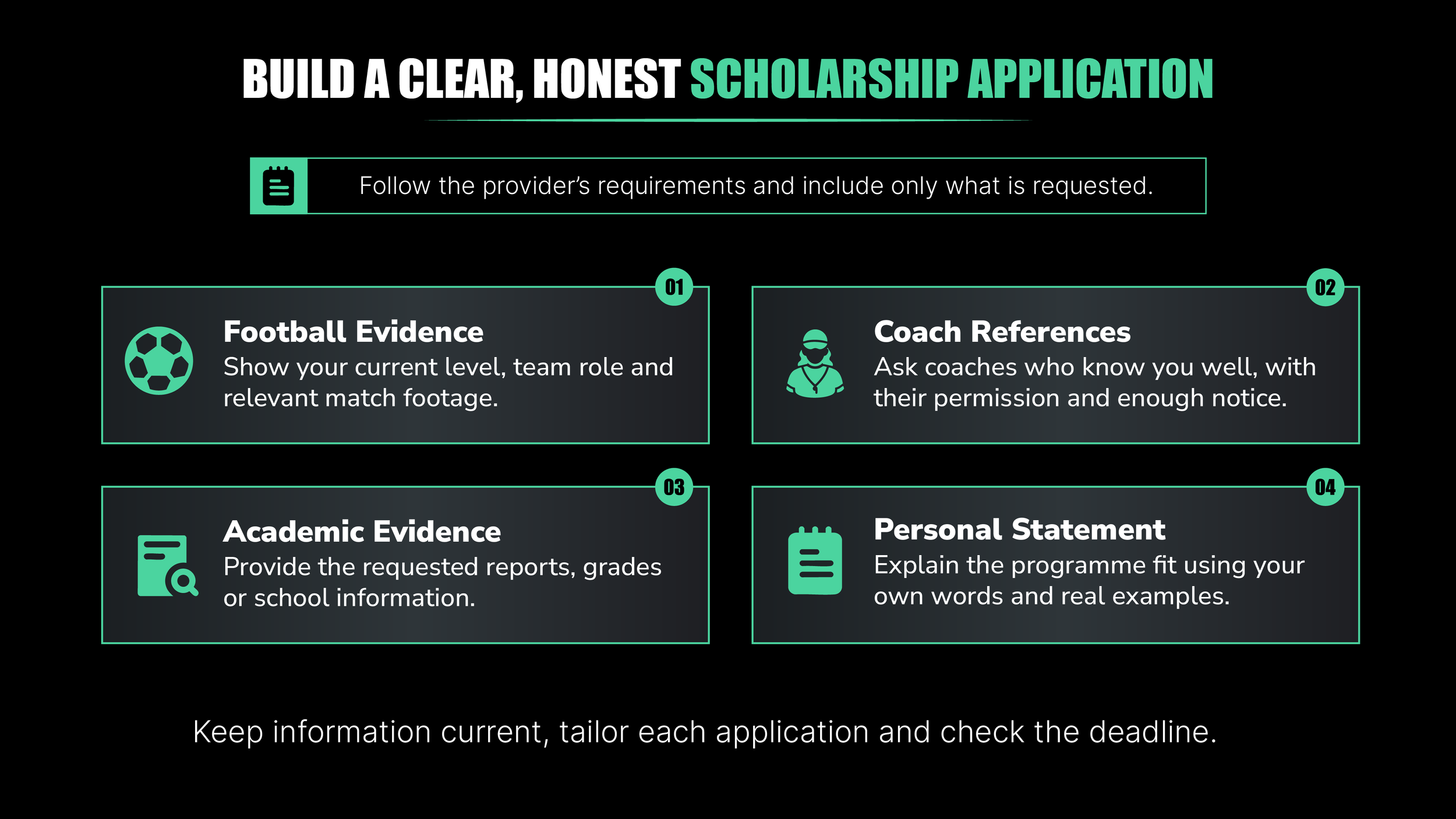
Football evidence
Football evidence should show the level your child plays at, their role in the team and what they can contribute. Check whether the provider wants a CV, match footage or a highlight video, then submit current material in the requested format. How to Write a Football CV for Academy Applications explains how to prepare the CV and video.
Coach references
Choose a coach who knows your child’s training and match performance well. Ask permission before listing them as a referee, give them enough notice and share the programme’s requirements. A reference with specific examples is more useful than general praise, and the coach should write it in their own words.
Academic evidence
Most scholarship panels look closely at school reports, predicted grades and attendance, because a scholar needs to manage a demanding timetable. A strong academic record shows commitment and discipline, qualities that coaches value as much as teachers do. Independent schools may also set their own entrance assessments, and our UK Boarding Schools guide explains how school admissions work.
Writing a personal statement or supporting letter
Some programmes ask for a personal statement from the player or a supporting letter from a parent. For older players, the statement should be in their own words, with a parent checking it rather than writing it. A good statement explains why the player wants this particular programme, what they have achieved and learned so far, and what they would contribute both on and off the pitch, such as leadership, effort in training or involvement in school life.
Keep it specific and honest, and stick to any word limit the provider sets. One real example, such as how your child responded to being dropped or how they balanced exams with a busy fixture list, says far more than a list of adjectives.
Common application mistakes
Check the instructions, word limits and deadlines before submitting. Avoid generic statements or claims that overstate the player’s level, and make sure the programme is a realistic fit. Older players should take the lead in describing their own experience, with a parent helping to check the application.
What Happens at a Football Scholarship Assessment Day
Shortlisted players are usually invited to an assessment day. The format varies between providers, but most include some combination of the following.
The football assessment
An assessment may include technical practices, small-sided games, match play or position-specific work. Goalkeepers may have separate activities covering handling, distribution and communication. Coaches can observe technique under pressure, decisions and teamwork, but the exact format varies. Ask the provider what to expect. For professional club trials and registration questions, the PFA’s Youth Advisory service offers independent advice.
Fitness testing
Some programmes include simple fitness tests, such as sprint or endurance tests, while many don't. Our guide to Football Fitness Training for Young Players Preparing for Academy Trials explains how to prepare safely.
Academic assessment
Schools may include academic tests or ask to see recent work, particularly if a player is joining at a main entry point. Ask the provider in advance what to expect so your child isn't caught by surprise.
Being observed off the ball
Assessors notice far more than what happens with the ball. They watch how players respond to mistakes, whether they encourage teammates, how they listen to coaching points and how they behave between sessions. A player who stays positive after a misplaced pass and keeps working is showing exactly the character that scholarship panels look for.

Your future
starts
here
REGISTER
Football Scholarship Interview Questions (and How to Answer Them)
Some scholarship assessments include an interview, particularly at schools and universities. It gives staff an opportunity to discuss motivation, interests and how the player might fit the programme. The questions below are examples for practice, rather than a list every provider will use.
| Example question | What the panel is assessing | How to answer well |
| What are your main strengths as a player? | Self-awareness and understanding of their own game | Name two or three specific strengths and give an example of each |
| What do you need to improve? | Honesty and coachability | Name a genuine weakness and explain what they are doing about it |
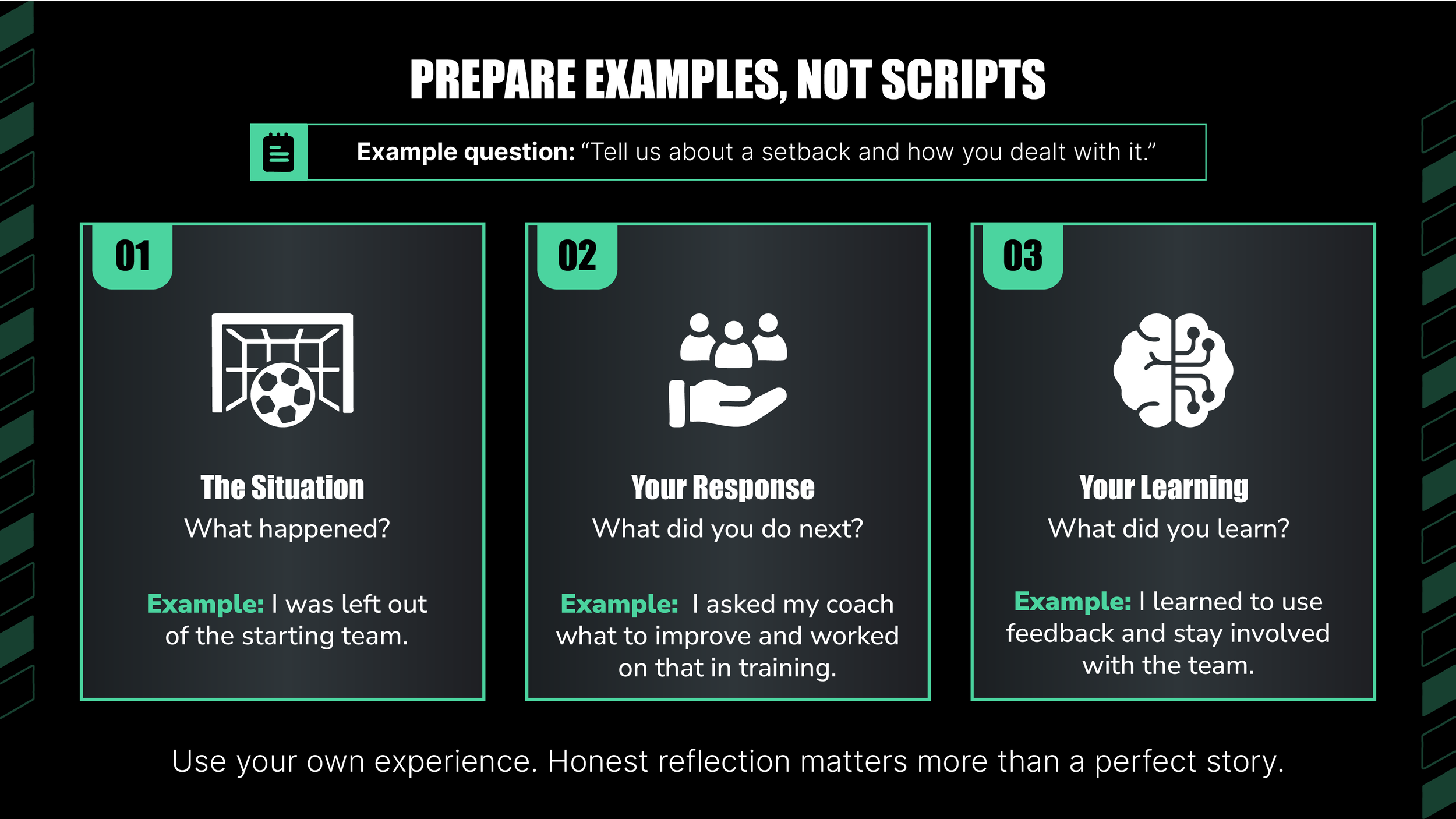
| Tell us about a setback and how you dealt with it. | Resilience | Describe a real situation, what they did next and what they learned |
| How will you balance football with your studies? | Organisation and commitment to education | Explain how they manage their time now, with a concrete example |
| Why do you want this scholarship? | Motivation and research | Refer to specific things about the programme, not just its reputation |
| What would you contribute beyond football? | Wider character and fit | Mention interests, responsibilities or ways they help others |
| How would you cope living away from home? | Independence and readiness for boarding (often asked of international or boarding applicants) | Be honest about the challenges and how they would handle them |
Prepare honest examples rather than memorised answers. Your child should be able to explain a strength, a development goal and something they learned from a setback. A practice conversation with a coach, teacher or trusted adult can help them get comfortable answering unfamiliar questions. University applicants can also consult UCAS interview guidance alongside their institution’s instructions.
Questions the player should ask
Interviews usually end with a chance to ask questions, and having one or two ready shows maturity and genuine interest. Good examples include asking how scholars are supported to balance training and study, what a typical week looks like, or how players' progress is reviewed. Avoid asking anything that is clearly answered on the programme's website.
When parents are interviewed too
Some providers also meet parents to discuss expectations and practical support. Be clear about your family’s circumstances and let your child answer questions directed to them. Younger applicants may need more help, but staff should still have a chance to hear their interests and motivation.
The Final Weeks Before an Assessment
The final weeks are about arriving prepared and confident, not cramming. Run through a practice interview or two, confirm the time, venue, kit requirements and anything else the provider has asked you to bring, and plan the journey so you arrive early. Keep training normal, protect your child's sleep and make sure they are well rested on the day. Our guides to Football Fitness Training for Young Players Preparing for Academy Trials cover the practical and physical preparation in more detail.
After the Assessment Day
A short thank-you email to the programme is a polite finishing touch. Then be patient, as decisions can take some time, and keep your other options open until you have a written offer. Our guide to What Happens After Football Academy Trials? explains the possible outcomes, and our Football Scholarships in the UK guide sets out the questions to ask before accepting any offer.
If You Don't Get a Scholarship
If your child is not offered an award, ask whether feedback is available and discuss the next step with their coach. Another programme or a later entry point may be suitable, depending on the provider’s rules. Families needing financial help can also ask about means-tested bursaries. A strong club, school or college environment may still support development without a scholarship.
How AF Global Can Help
AF Global's free Scholarship Trial Days give boys aged 7 to 11 across London and Kent the chance to experience our programme and be assessed for a scholarship place. For players aged 14 and over who want structured support as they prepare for scholarships and trials, Elite Player Mentoring offers one-to-one development guidance.
Our team looks at each player's football, education and goals, and can help you understand which route is the right fit. To find out more, register your interest.
Final Thoughts
Prepare around the requirements of the programmes that fit your child. Build an accurate application, check the assessment format and help them practise talking about their football and education goals. Keep other options open until an offer is confirmed. To explore opportunities through AF Global, register your interest with our team.
Frequently Asked Questions
-
Competition is strong, especially for the best-known programmes, and no scholarship is guaranteed. Players improve their chances by applying to programmes that genuinely match their level, preparing a specific and honest application, and showing good character as well as ability at the assessment day.
-
Start researching around 12 to 18 months before the intended start date. Many independent schools assess candidates well before the year of entry, while university scholarships follow the admissions cycle, so check each provider's dates directly.
-
Assessors look at technical ability, decision-making and potential, as well as attitude, resilience, coachability and how players work with others. Academic commitment matters too, because most scholarships combine football with education.
-
Common questions cover the player's strengths and weaknesses, how they have handled setbacks, how they balance football with school, why they want the scholarship and what they would contribute beyond football. Specific, honest answers work best.
-
No. Many school, college and university scholarships are awarded to players from grassroots clubs, as long as they play regularly at a good standard and show potential. Club academy scholarships at 16, however, usually go to players already in the club's system.
-
Yes. Most families apply to a small shortlist of programmes. Tailor each application to the programme, and keep track of each provider's dates and requirements.