

How To Help Your Child Become A Professional Footballer
The idea of being a professional soccer player’s parent is a great dream that many parents have. In fact, according to the 2025 Youth Sports Parent Survey, 11.4% of parents believe that their child has the ability to play professional sports. But it’s no surprise that you need to be really good at football to really make it in Europe, and it goes without saying that no one is born that good.
That’s why many parents wonder what they can do to help their child become a professional footballer. In this article, you’ll find what becoming a professional footballer really means and what that journey can look like. By the end, you’ll have an idea about how you can get started on this journey.
Is Your Child Really Into Football?
It comes as no surprise that your love for the sport is unshakeable. But the same desire and passion isn’t something that you can apply to children. Unfortunately, as your children grow up, their passions and the things they like doing will continue to change. So, before you start getting ready to dive into becoming a full-blown football parent, you’ll need to have some idea about whether or not your child enjoys football as much as you think they do.
Some children are naturally drawn towards dribbling around with the ball and having some fun. And that’s great. But you’re not going to see that same level of enthusiasm from every child, and that certainly doesn’t mean you should give up on that dream. Sometimes, you just need to give a little push and keep watching.

To really understand if your son/daughter wants to go down the footballing route, try introducing them to the game and see where that goes. If you enjoy going to stadiums to watch games, take them with you. Even if you don’t, you can leave the game open in the background or play around with them. You never know what might get your child interested in the game, so you have to try everything there is.
There’s a pretty high chance that your child is going to follow in your footsteps. And so, they’ll naturally enjoy the sport. But that’s not always going to be the case, and you need to be ready to understand that in case that happens. Still, as long as you can see your child take part in the sport, keep it a recurring and enjoyable experience for them. When you give it a little bit of time, you’ll get a better idea of whether or not your child is enjoying the sport. And once you have that answer, you can think about training them to become a professional soccer player.
Do You Have What It Takes To Support Your Child’s Journey?
Now that you have worries about your child out of the way, you need to sit down and do some reflecting. You need to ask yourself if you have what it takes to support your child’s footballing journey.
As a parent, you already know that you can’t do everything for your child, as much as you’d love to. And so, you need to understand that your child’s road to becoming a professional soccer player is going to be extremely bumpy and extremely long, for both you and your child. This journey is going to cost you a lot, both figuratively and literally.
First things first, understand that becoming a professional isn’t going to happen instantly. It takes a lot of time, a lot of your money and a lot of your patience. You might be excited about this dream coming true right now, but do you really have it in you to continue supporting this dream 5-7 years down the line? For some, it might take even longer.
Then there’s the money aspect of it. To really give your child a shot at becoming a professional soccer player, that means investing in the right football academies and the right equipment. While this is something we go into more detail later on, it’s still worth thinking about before you get started on this journey. It’s no surprise that football academies and football equipment can be expensive. And it’s definitely no surprise that you’ll make these purchases as your child gets older. So, the main question becomes whether you can really handle the dents that football can make in your wallet.
Finally, your emotional patience is also something that matters a lot. You may enjoy going to practice consistently now, but there’s no telling how you’ll feel about it a few years from now. When you get started on this journey, you need to understand that you’re choosing to make the sacrifice of consistently going to practice every time.
Look, we’re not trying to scare you away from this dream, but it’s necessary to sit down and give it a thought because no one wants it to become a problem later on. Football can be an exhausting and expensive journey, so you should be 100% sure that this is something you want to go ahead with.
What You Can Do For Your Child
Once the thinking cap is off your head and you are ready to chase the football parent dream seriously, you need to figure out what you can do to help your child. Your role as a football parent isn’t to be a coach. That’s literally the coach’s job. Your job is to be supportive of your child and to constantly keep them ready, motivated and healthy for their games.
As a parent, you don’t need to call up a famous Premier League coach to start supporting your child, though that’s a pretty great connection to have. You just need to help them build the right habits early on.

Your future
starts
here
REGISTER
Keep Them Healthy
Soccer fitness and health are arguably the most important jobs that a parent has to take care of for their child. While soccer IQ is pretty important, your health and fitness as a footballer are just as important.
Nowadays, you see all these European clubs spending a lot of money on hiring the right chefs and the right physical team, and it’s all because of how important players’ health and post-game fitness are. The same idea can definitely be applied to your children.
For your child to stand out amongst others, it’s important for them to be active and have a great diet. These two factors are important in making your child seem more athletic. These little things can end up making all the difference since scouts are almost always looking to check one box at a time. And these boxes almost always start off by looking at whether someone is athletic. Once something as trivial as athletic ability is out of the way, scouts can better focus on the player’s football mindset and technical skills.
But as parents, it’s pretty easy to get confused as to what athletic ability really means. For some, they might think it’s how fast their child runs, but athletic ability isn’t restricted to something like this. It can mean something as simple as not getting tired in the first 10 minutes of a game, and these are all things that parents can focus on when training their child.
Keep Them Interested
We already talked about how easy it is for a child to move on to something else that they enjoy. But if they’ve already started their football journey, it’s going to be up to you to keep them interested in the game.
The whole idea is that football should stay fun, even when things start to get serious. When your child starts moving towards more serious games like tournaments, things will start to heat up. Practice is going to get more intense, and the sport will just keep on wanting more effort from your son/daughter. And so, it’s no surprise that your child will start to feel a slight disconnect.
That’s why you’re going to have to look for ways to keep your child interested. While how and where the child plays the sport isn’t something that’s going to be in your control, you can still keep it enjoyable for them as a spectator. Try to involve your children in things that you enjoy about the sport.
If you love watching a team like Newcastle Football Club, sit down and watch the matches with your child. Having a favourite team and football idol to follow can go a really long way in keeping people motivated. And that’s something you can note yourself. You probably sit down week in and week out watching your favourite team perform and seeing how they’re doing. In turn, this sort of passion is often automatically transferred onto your child. In fact, according to a study done by Ohara et al. in 2025, 19.7% of children in the study started playing soccer because of their parents. This just shows the level of impact your decisions can have on your child’s footballing journey.
Preparing Them For The Journey Ahead
While this is something that will apply as your child grows older, it’s still something that parents need to keep track of. And it’s ensuring that your son/daughter doesn’t end up getting ahead of themselves.
As a parent, it’s your responsibility to teach your child that football isn’t an easy way to get rich and famous. The journey itself isn’t one that’ll be complete in a few weeks, it’s one that will continue as long as your child is playing the sport. This isn’t a conversation that’s meant to discourage your son/daughter from playing, but it’s to keep their expectations real.
Another thing that parents have to be prepared for is to teach some level of resilience to their child. There’s a pretty high chance that your child isn’t going to be blessed with the talent of a player like Lionel Messi. And that means your son/daughter will continue to miss out on selections and lose games from time to time. Even as a football fan, you should know how devastating it can be to just watch your favourite team lose a game. Imagine what it’ll be like when your child is a part of that team. So, it becomes your responsibility to ensure that your child doesn’t lose their motivation because of such experiences.
Getting Them To Train Often
As a footballer, one thing that never ends is training, and that’s something that your child will need to learn early on. In order to really grow as a player, your child needs to be a consistent part of team trainings. This allows them to learn and build upon their technical skills.
But when we talk about training, that doesn’t mean repeating the same drills every day. In order to really build on the skills your child has, they’ll need to work on all aspects of their game. This means working on things like their passing, off-the-ball runs or even general positioning in a game.

Training doesn’t just mean improving your soccer fitness or the way you strike a ball. In fact, some of the best players out there, like Cristiano Ronaldo and Kevin De Bruyne, are known for their game IQ. This means understanding the game and movements that players generally make, and then building your game around that. Your game IQ involves things like deciding when and where to make a run, sacrificing a good chance to make something better for your teammate or even doing something unexpected in the heat of the moment. When you train, you’re inevitably understanding the game more. In turn, this improves your decision-making and makes your child a better footballer, one whose soccer fitness stands out as much as their football mindset.
Encourage And Keep Supporting Them
As a parent, your support goes a really long way. You’ll see that time and time again, your child will continue to try and find out what you thought of their performance or if you were watching them when they scored that cool goal. It might seem like what we’re saying is really obvious: of course, you have to support your child. But as a football parent, support means way more than just being present.

Your presence is actually just step one of being supportive. To show your children that you actually care about their efforts, you will have to show up to their games, even the small ones that may not matter as much. Once you start attending these matches, you’ll also have a better idea about how your son/daughter plays. In turn, that opens the door for you to give feedback that actually matters.
According to a study done by Lobinger et al. in 2021, players actually appreciated when their parents were involved and supportive. But when we talk about being supportive and involved with your child’s game, we don’t mean micromanaging. The same study found that children weren’t looking for technical or tactical advice from their parents. All they wanted was their parents to be supportive of their effort and attitude, not the performance. This is also something that we’ll go into more detail in later sections because the last thing you want to do is micromanage your child’s performances.
Don’t Sideline Their Studies
It goes without saying that football is an extremely competitive sport, and not everyone’s going to make it big. That’s why you cannot afford to drop everything to solely focus on ensuring that your child becomes a professional. Sometimes, it’s just not meant to be.

As a parent, it’s your job to ensure that there’s some kind of balance in your child’s life. Balance that ensures that there’s still some option out there for your son/daughter if the professional footballer life doesn’t work out. As your child grows older, training and games become more difficult and start to take up way more time. Because of that, the pressure to keep grades up also increases. That’s where it becomes your job to ensure that your child isn’t slacking off when it comes to GCSEs or school studies.
Just take a look at the example of exceptional young players like Myles Lewis-Skelly set for the upcoming generation of footballers. According to the BBC, Myles Lewis-Skelly was 17 and went on a summer tour with Arsenal in the United States. But that didn’t sideline his studies. His mother talks about how he still continued to give his A-levels during this tour and how education is something that cannot be ignored in their family. The same BBC report also talked about how a club as big as Arsenal respected the fact that sometimes Lewis-Skelly needed to prioritise his studies over football.
When you start searching for academy registration, you’ll also need to look out for an academy that gives just as much importance to education as they do to football. That’s when you’ll need to find academies like AF Global, they understand how important your child’s education is. The organisation is partnered with established schools and universities like Beechwood School, Trinity School, and the University of Hertfordshire. These partnerships ensure that your child is given the full academic curriculum while being given game IQ, sports and personal development training.
Supporting Your Child’s Technical Journey
The everyday and emotional support is one thing that’s pretty easy to get a grasp on. But as we all know, football has a technical side that needs a lot of attention. When we talk about the technical side, we’re telling you to go hands-on and become the coach that your child needs, unless you have the qualifications to do so. At this stage, your job is to create the right kind of environment for your child, not hover over every decision they make in a game.
Teaching Your Child About The Game
As a parent, there are definitely a few basics of football that you can start teaching your child. This includes some of the easiest but most important things there are to know, like what is the offside rule and why isn't every outfield player running after the ball at once like in Shaolin Soccer.
While technical skills are something that your son/daughter will learn more about through their UK football trials, the football mindset and game IQ are something you can start explaining to them, even as a fan. When you watch matches with your children, you can always start by pointing out some of the key things that you notice. This can include things like an off-the-ball run or a key touch that a player makes. We highly recommend that you get your child to listen in to the commentary and stick around for the post-match analysis done on many TV channels. The commentary and analysis nowadays focuses more on individual moments of brilliance and tactical changes that teams are making throughout the game. When you wait for the post-match analysis, you’ll get a better idea about what decisions professionals and professional teams are making and why they’re making them.
The goal here isn’t to start over-analysing like you’re the post-match analysis team because chances are, your football knowledge may not be as great as those that you see on TV, like Thierry Henry on CBS. Your job is to just point out the simple stuff and get your child to start thinking. Before you know it, you might even notice your child trying to recreate what they saw as they were watching the match.

Is Your Child In The Right Environment?
When we talk about your child’s environment, there are two things to look at. One is the environment that you create, and that’s something that you can always work on. The other is the environment around them when they’re playing football. This could include the academy they are already in.
If your child’s footballing environment isn’t great, you’ll notice them starting to fall behind. As it stands, the people your child trains and plays alongside make a huge difference. In order for them to thrive, they need to be in an academy that feels competitive but not toxic. They also need to be in a team that’s as good as they are. Your child’s growth can be hindered if they are in a team that just isn’t as good as they are.

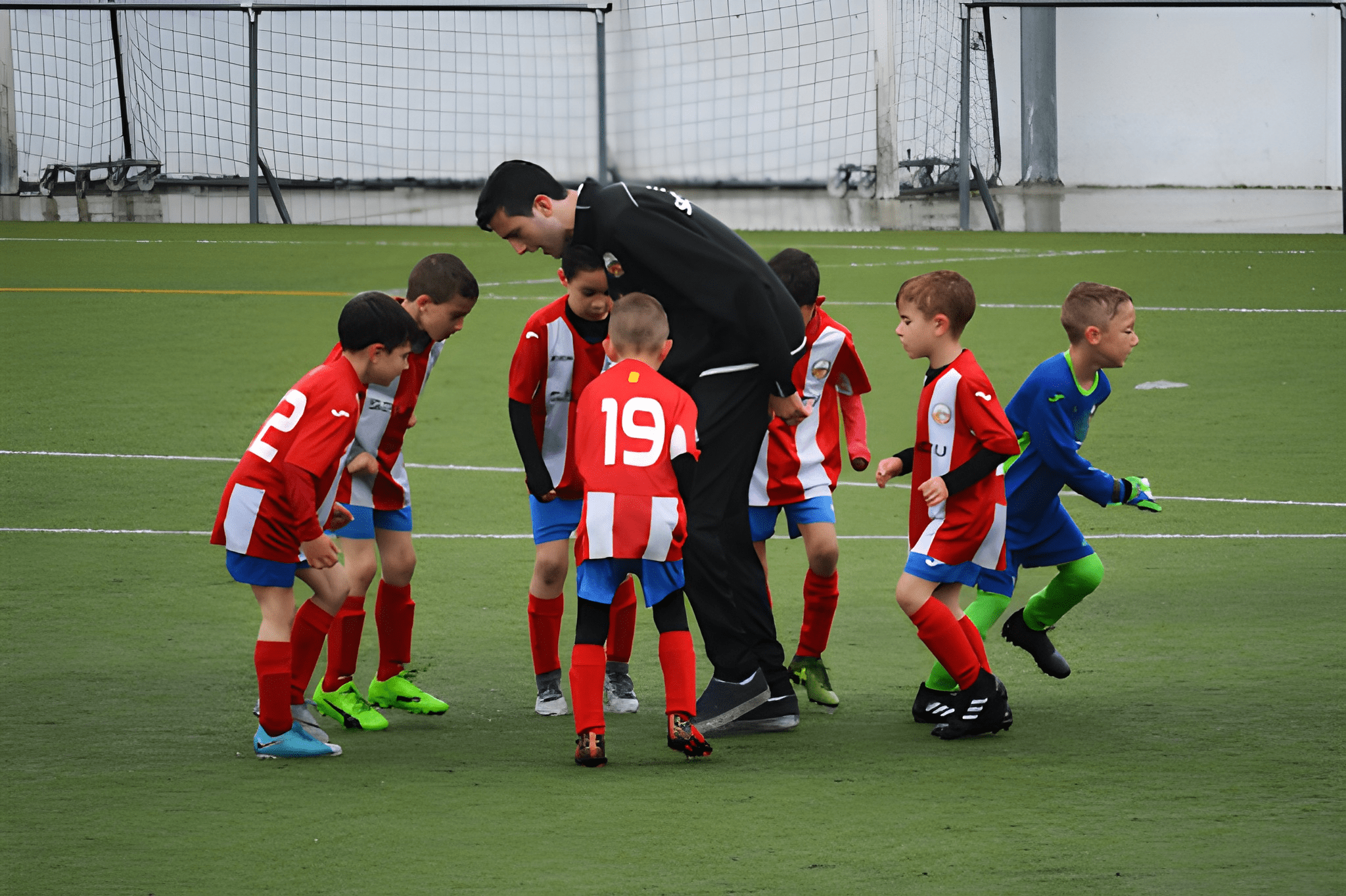
That’s why getting them into a solid academy is important. An academy is what provides a proper footballing structure. This ensures that your child is regularly trained under qualified coaches and gets the chance to be in important matches or in front of scouts.
Which Football Academy Is Right For Your Child?
We’ve talked a lot about sending your child to a football academy, but as a parent, you can’t help but stress about whether or not you’re picking the right place for your child. And we understand that it can be a very difficult decision to make. That’s why we’ve listed down the key things that you’ll need to consider before picking the right academy for your child:
Location
First things first, you’ll need to check the locality of the academy you’re looking at. This is something that goes hand-in-hand with the next section about partnerships. You see, picking an academy that’s in a larger town or capital city is always going to have better partnerships and better links to professional teams. At the same time, location also works hand-in-hand with you being ready to support your child’s footballing journey, because for some parents, accessibility is very important.
Contacts/Partnerships
The contacts or professional partnerships that an academy has are pretty telling of how good the place is for your child. If you want your child to have the best of the best opportunities to participate in tournaments and official trials, you’ll need to find an academy that has international and professional partnerships. These partnerships determine the level of coaches you’ll find at the academy.
Level Of Coaches
The coaches that you find at footballing academies will be like second parents to your child. For every training, every match and every tournament, your child’s coach will always be there, even if you can’t. That’s why you’ll want to ensure that the academy you’re picking has some of the best coaching options there are. This doesn’t just help your child become a better footballer, it also gives them more opportunities to be in scenarios that really matter, like UK football trials.
We understand that finding the right football academy can be a difficult task, but you don’t have to look any further than AF Global. AF Global is an international football development organisation with several partnerships with existing schools and universities. You’d be wrong to think of AF Global as just any footballing academy. It’s more of a footballing faculty that works inside well-known institutions so that students can pursue professional-level football while not compromising on their academic education. AF Global’s team is filled with UEFA-qualified coaches, analysts and specialists who’ll oversee your child’s football performances in order to develop a well-rounded, soon-to-be professional. With an organisation like AF Global, you won’t have to worry about your child receiving anything less than the best training and experience there is.
Mistakes That Parents Often Make
Before we wrap up, there are a few things that many parents do which really affect their child’s football development. We understand that parents often act in the best interests of their children, but sometimes, things are better left alone with the professionals.
Micromanaging Your Child
One of the most notable problems that many coaches note is micromanaging parents. The whole point of a football academy is to find what works for your child and their development. Yet, many parents tend to expect perfection and try to give too many instructions at once. In turn, they end up undermining the coach, which raises problems with both your child and the coach. As we saw in Lobinger’s study, players don’t want parents giving out advice, they want support and encouragement.
Not Giving Their Opportunities Enough Importance
For a child looking to go professional, each match and each trial is just as important as the other. As a parent, the last thing you want to do is skip out on a match because you never know when your child might get that break they need to really shine.
Relying On Your Child’s Talent
Finally, there’s the reliance on your child’s talent. We understand that your child can be talented, but talent can only take you so far. With the right football academy and coaches, your child’s talent can be worked on to improve their game and make them better footballers..
Frequently Asked Questions
-
As a parent, you can help your child become a professional soccer player by ensuring that they are in the right environment, which tests their ability and helps them develop. You can also enrol them in a good football academy so they can train under great coaches and play in prestigious competitions.
-
Letting your child take part in routine matches and important trials or tournaments is a great way to get your child scouted by professionals. Scouts are often secretly present at trials and tournaments to see which players stand out from the rest. Plus, these events give your child the space to show off his abilities to the coaches present.
-
As a football parent, you do not want to micromanage how your child plays. Instead of giving harsh feedback on how they played, support and encourage them. Parents also make the mistake of not giving football trials enough importance or just relying entirely on the child’s talent. Football trials are the most important place for your child to kickstart their professional career. Also, your child will only become a better player if they are trained properly to find a playstyle that complements their talent.
-
In order to pick the right football academy for your child, look at where the academy is located and what partnerships it has. Academies in capital cities or larger towns often have better partnerships and international opportunities. The football academy you choose should also have professional licensed coaches so that your child is receiving the best training possible. If you’re still unsure about which football academy to choose for your child, look no further than AF Global. Here, your child will be under the care of some of the best UEFA-Licensed coaches and specialists so that they can grow into the professional soccer player that you want.
Final Thoughts
At the end of the day, helping your child become a professional footballer is all about what you can do for them and what you can give them. This means creating the right environment for them to the best of your abilities. After that, you’ll need to leave the work up to the professionals at whichever football academy you pick. Academies like AF Global ensure that your child receives the best training possible while ensuring that their studies are not compromised.
Like any professional footballer nowadays, there will be a lot of challenges, a lot of injuries and a lot of setbacks. But that’s where you come in as parents, ensuring that your child doesn’t lose their motivation when things head south. Ultimately, remember that as much as you want your child to become a professional, it’s their life. So, forcing them to do something they don’t want is never a good idea.